



Edição 90 JUL/OUT | Download.
A new era – Linhas Aéreas de Moçambique becomes Air Mozambique

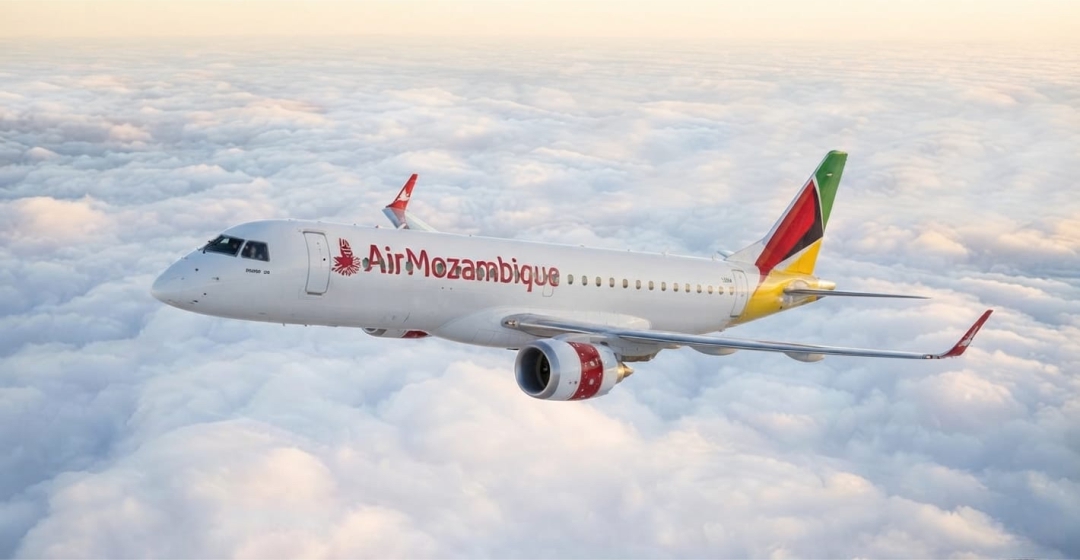
Linhas Aéreas de Moçambique (Mozambique Airlines – LAM) is now commencing commercial operations under the “Air Mozambique” brand, marking the start of a new era in the national carrier’s restructuring process. This rebranding coincides with the strengthening of the fleet through the introduction of two Embraer 190 aircraft, aimed at restoring capacity, service reliability, and financial sustainability.
The adoption of the Air Mozambique brand and the integration of the new aircraft are part of a recovery plan designed to boost operational efficiency, improve flight reliability, and create the conditions for greater financial sustainability.
More than just a change in image, the new commercial identity is intended to signal a broader transformation of the carrier. As stated by the Minister of Transport and Logistics, João Matlombe, the company’s recovery is a priority for the transport sector. “The Government views this change as part of a new institutional phase for the company. However, a new identity must be accompanied by an effective organizational transformation. Modernizing an airline is not limited to its image; it involves how the company is managed, how it utilizes its resources, how it organizes its operations, and how it responds to market demands,” Matlombe noted.
The transformation of LAM, he noted, is a process requiring continuity, discipline, and execution capability. “We do not expect the problems accumulated over the years to be resolved immediately. However, we hope that the measures adopted will yield concrete improvements and that these improvements will be progressively felt by the citizens.”
Two more aircraft for the domestic route
“We do not expect the problems accumulated over the years to be resolved immediately. However, we hope that the measures adopted will yield concrete improvements and that these improvements will be progressively felt by the citizens”-JOÃO MATLOMBE
Air Mozambique has expanded its domestic fleet with two aircraft, an initiative aimed at strengthening connections between provinces and facilitating the mobility of passengers, businesspeople, and the general public.
The aircraft in question are Embraer 190s, named “Zambeze” and “Limpopo”, tasked with reducing the need for stopovers in other cities when traveling between the Central and Northern regions. The “Zambeze” has been based in the city of Beira (Sofala province) to ensure inter-provincial connections with Tete, Quelimane, Nampula, Pemba, and Nacala.
This operational boost comes as LAM undergoes restructuring following several years marked by operational issues linked to a limited fleet and a lack of investment.
For Agostinho Langa, Chairman of the Board of Directors of LAM, the arrival of these two aircraft represents a significant step in the company’s recovery. “The addition of these two Embraer aircraft marks a major milestone in the process of renewing and strengthening the national carrier’s fleet,” the Chairman noted, also highlighting the increased operational capacity, flight stabilization, and the gradual improvement in the quality of service provided to passengers.
Meanwhile, the Minister of Transport and Logistics, João Matlombe, emphasized that this investment should be viewed within the context of the Government’s strategy to improve mobility across the country and create conditions for greater economic and territorial integration.
“Mozambique is a vast country, with its main centers of economic activity distributed across different regions. The movement of people, goods, services, and factors of production is fundamental to the functioning of the economy,” the official stated, highlighting the important role played by aviation, particularly its ability to reduce distances and travel time between the country’s various regions.
“Our goal is to create an airline that is more efficient, financially sustainable, and capable of providing regular, safe, and high-quality service,” he added.
The airline plans to expand its fleet to 12 aircraft by the end of the year, a strategy intended to increase flight availability, reduce schedule disruptions, and improve connectivity between the country’s key economic hubs.
Edição 90 JUL/OUT | Download.
">























0 Comments