



Black pepper – The trail of other times
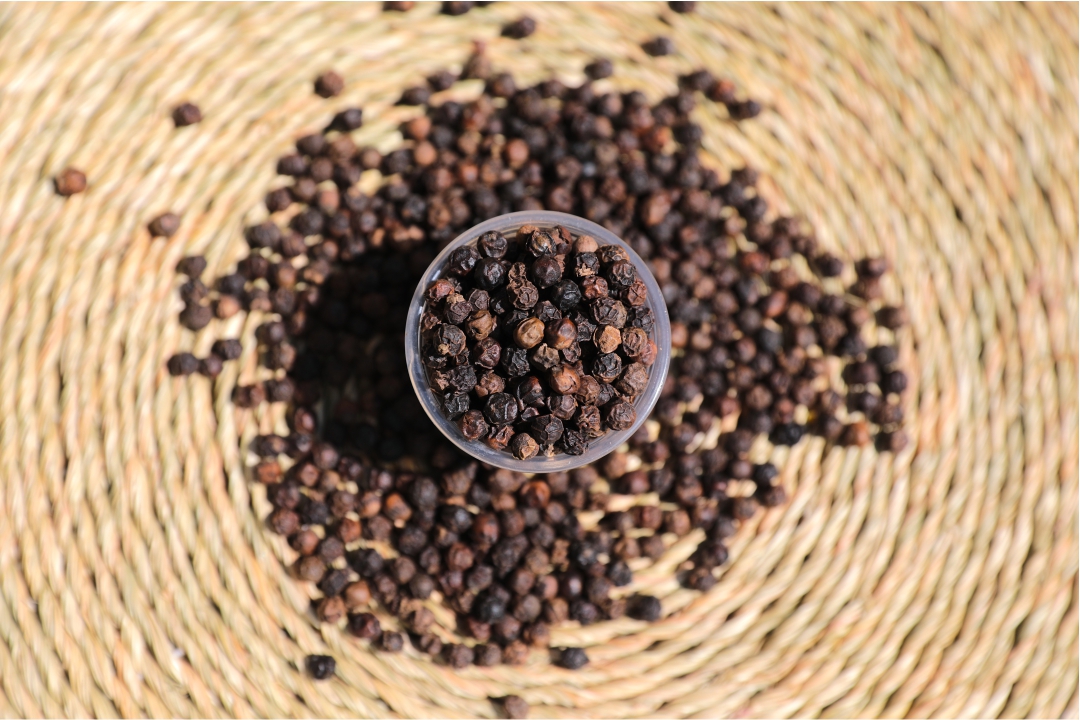
There are small things that carry giant stories. A tiny, dark sphere – seemingly insignificant as it rests between one’s fingers – has crossed oceans, fueled empires, driven merchants, and helped shape the maps of the world. Black pepper is one of these silent witnesses to human history.
Long before reaching our kitchens as a simple seasoning, Piper nigrum was already a highly sought-after commodity along ancient trade routes. Originating on the Malabar Coast of present-day India, black pepper became one of the ancient world’s most coveted spices; it reached the Mediterranean via Arab trade networks and subsequently entered the European imagination as a symbol of wealth and power.
However, these stories of circulation did not unfold solely between Asia, the Middle East, and Europe. For centuries, the East African coast served as a major maritime thoroughfare for cultural exchange. The so-called Swahili Coast – stretching from the Horn of Africa to the shores of Mozambique and encompassing centers such as Sofala – was an integral part of this trading network.
Sofala, in particular, held a strategic position in this world. Long before the arrival of the Portuguese in the 16th century, it was a major trading hub linked to gold routes from the interior and the flow of goods from across the globe. People, languages, cultures, textiles, metals, and – inevitably – flavors all circulated there.
This does not mean that black pepper was historically cultivated in Sofala, nor that its presence there can be attributed solely to those trade routes. Yet, the history of the Swahili coast reminds us that flavors are never merely local. Every ingredient that reaches the table is also the result of journeys, encounters, and transformations.
There is something fascinating about the fact that a spice associated for centuries with royal courts and global trade has ended up reduced to an everyday gesture: a simple movement of the hand over a plate. A grind of pepper over fish, soup, or meat is – unbeknownst to us – a small reenactment of those ancient voyages.
From a nutritional standpoint, black pepper is best known for containing piperine, the compound responsible for its pungent flavor and distinctive aroma. Piperine has been studied for its antioxidant properties and its potential to enhance the absorption of certain nutrients, such as the curcumin found in turmeric. The spice also contains small amounts of minerals like manganese and iron, as well as vitamin K; however, since it is typically consumed in small quantities, it serves more as a dietary supplement than as a primary source of nutrients.
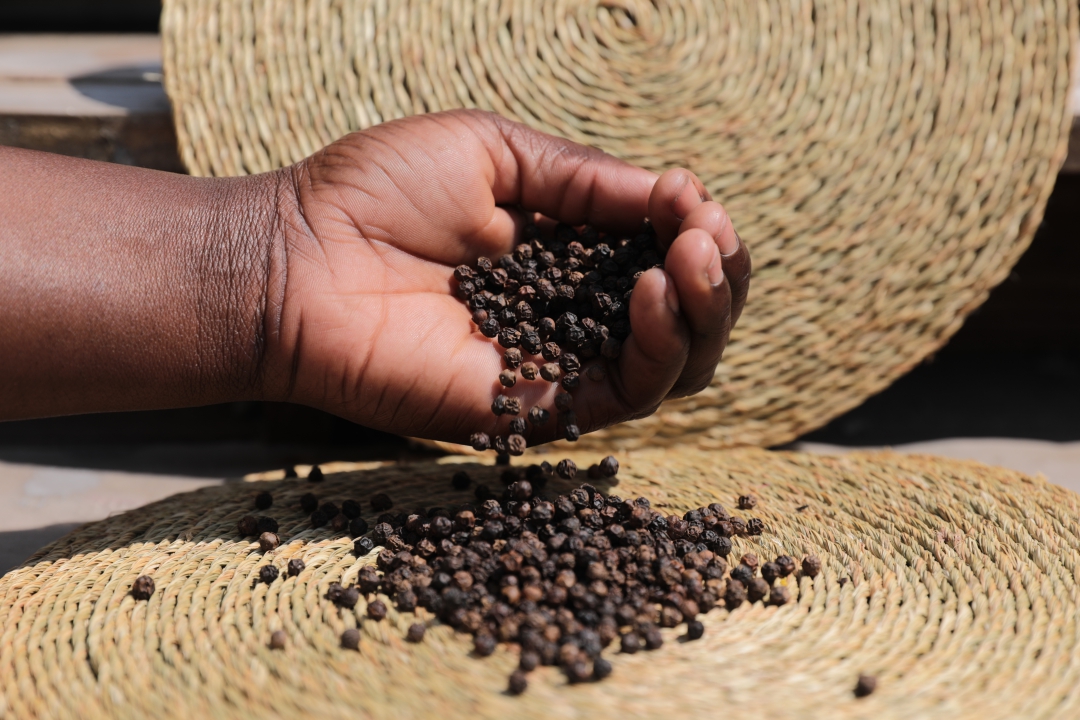
But perhaps its greatest strength lies more in what it stirs in our memory. Pepper warms the dish, prolongs the flavor, and creates a presence that emerges gradually – first subtle, then persistent.
Much like art, black pepper acts as a kind of archive. It holds traces of empires, explorers, merchants, and nameless kitchens. It is a tiny seed that reminds us the world has always been in motion – and that history, too, can often be told through the palate.
FROM A NUTRITIONAL STANDPOINT, BLACK PEPPER IS BEST KNOWN FOR CONTAINING PIPERINE, THE COMPOUND RESPONSIBLE FOR ITS PUNGENT FLAVOR AND DISTINCTIVE AROMA.
">




















0 Comments