


Texto: Hermenegildo Langa
Foto: Ângelo Seia e Stélio Cangela
Edição 90 JUL/OUT | Download.
On the path to large-scale industry – Mozambique seeks a new welding approach
Mozambique is embarking on the path of African industry, with the valorization of technical experience, knowledge and skills developed on the continent itself. The country is beginning to train professionals with a view to meeting mega-projects, especially in mining and hydrocarbons, where great expectations for the future are anchored. For welders, for example, although their relevance is recognized, they lack quality training and certification.
The advent of mega-projects has exposed weaknesses and challenges that were previously treated somewhat lightly regarding welding, training, and certification.
Over the last decade, there has been an unprecedented race to address these gaps, as major projects demand high standards of quality, safety, and execution efficiency.
A shortage of locally qualified and certified professionals, combined with a lack of specialized training centers, limits the continent’s ability to meet the technical requirements of these ventures.
In Mozambique, the rapid expansion of mega-projects has created a need for workforce upskilling; however, training and certification processes have failed to keep pace with this growth, resulting in a reliance on foreign professionals or imported certifications.
The current push for a paradigm shift requires the government and the private sector to align in seeking solutions to a problem that has long been deferred.
The TWF Conference
”Welding should not be viewed merely as a technical profession, but also as a strategic competency for industrial sectors”–Estevão Pale
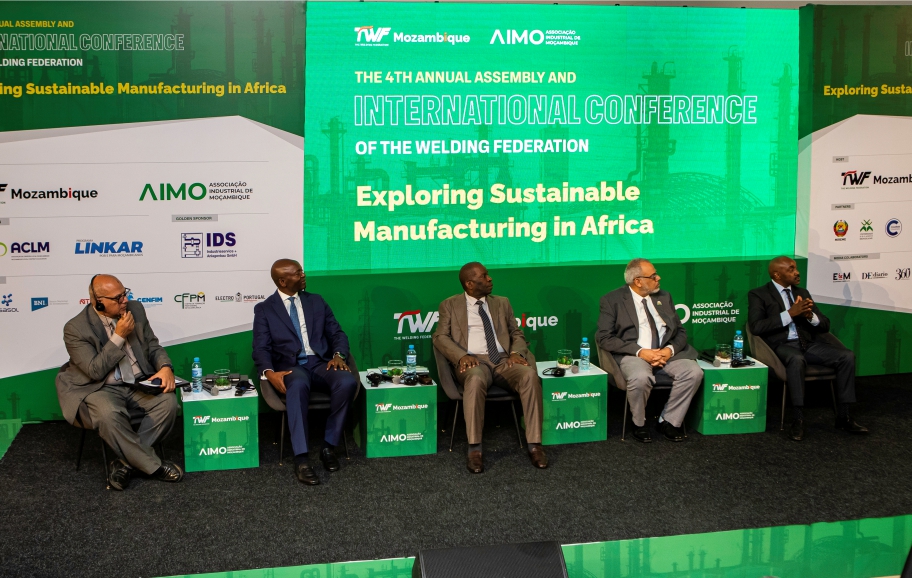
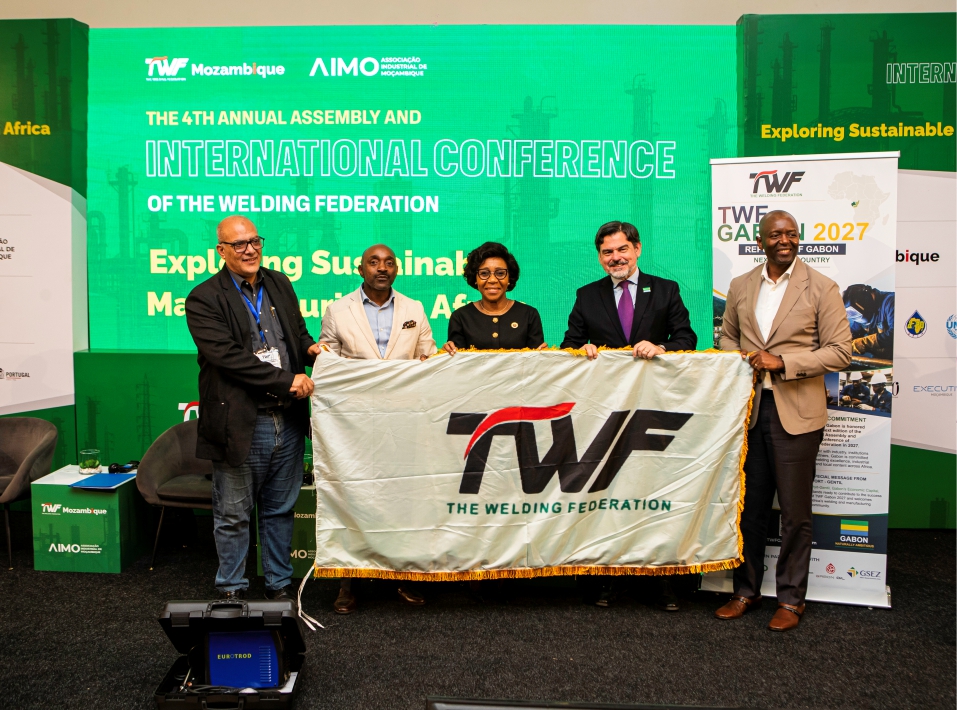
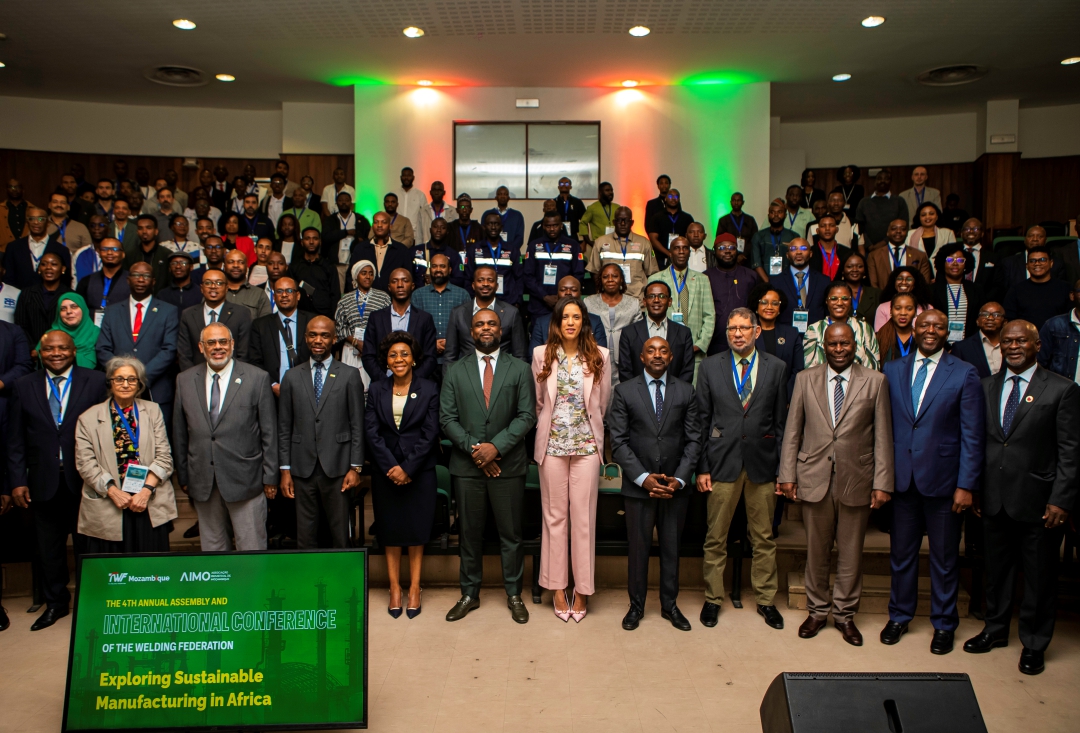
In June, the country hosted the 4th Annual Assembly and International Conference of the Pan-African Welding Federation (TWF), organized by the Industrial Association of Mozambique (AIMO) and the TWF. The event brought together representatives from industry, public institutions, academia, training centers, researchers, specialists, and delegates from various African countries to discuss the challenges and opportunities facing manufacturing in Africa.
The event took place concurrently with the African welding championship, welding being a key area for the success of mega-projects.
Representing the Government, the Minister of Mineral Resources and Energy, Estevão Pale, advocated for increasing the participation of Mozambican companies and professionals in the natural gas, mining, and energy sectors by strengthening technical training and implementing the new Local Content Law.
According to Pale, the new Local Content Law is expected to create better conditions for Mozambican companies to participate more actively in the energy and mining sector value chains. “The country’s future will depend not only on the exploitation of natural resources but also on its ability to transform knowledge, technology, and skills into sustainable economic development,” he stated.
Welding, Pale noted, should be viewed not merely as a technical profession but also as a strategic skill. “When we speak of local content, we are talking precisely about Mozambique’s capacity to locally produce the goods and services demanded by major projects,” he emphasized.
For her part, the Secretary of State for Industry at the Ministry of Finance, Custódia Paúnde, argues that the country must accelerate the standardization of industrial practices, invest in workforce training, and strengthen the integration of domestic companies into African value chains in order to boost the manufacturing sector’s competitiveness and capitalize on the opportunities created by the African Continental Free Trade Area.
For Paúnde, the large investments existing on the continent must create opportunities, firstly, for African companies and professionals. “The creation of TWF Mozambique represents an important step towards the training and certification of welders, inspectors, supervisors and other professionals in the sector, contributing to raising technical standards and meeting the requirements of major projects currently underway in the country”.
Training and certification
AIMO President Paulo Chibanga highlighted the importance of training qualified welders, especially as the country prepares for new phases of its natural gas projects and seeks to increase local participation in manufacturing and construction activities.
Chibanga emphasized that welding is a strategic skill for fostering the involvement of Mozambican Small and Medium-sized Enterprises (SMEs) in these large-scale projects, noting that the field is fundamental to any industrial or energy initiative. “Investing in our people and strengthening our companies are critical steps toward ensuring increasing Mozambican participation in the value chains of major projects,” Chibanga affirmed.
To address this dynamic, a strategic partnership was established at the TWF conference between AIMO and the Association of Small and Medium-sized Enterprises (APME), aiming to promote local content and integrate SMEs into the mining and energy sector value chains.
The agreement, signed by Chibanga and APME President Pedro Silva, also seeks to strengthen collaboration between the two associations in promoting local content, building business capacity, and creating opportunities for Mozambican micro, small, and medium-sized enterprises to participate more actively in major investment projects and supply chains within the national economy’s strategic sectors.
However, the challenges are not limited to training and certification; there are also other structural barriers preventing African countries from capitalizing on opportunities arising from major projects.
Other challenges, other solutions
Hennie De Wet, a representative of RITC MOZ, a Mozambican inspection and certification company, states that there are numerous opportunities within the African industry to promote the local workforce. “However, language barriers pose a major challenge for many seeking to enter the labor market. We have many young people who lack proficiency in English, a language that is essential for large-scale projects. We also observe significant difficulties regarding mathematical calculations. Therefore, we believe these are fundamental issues that can only be overcome through quality training,” explained De Wet, advocating for more capacity-building programs.
However, Seyit Orhan Baydar, General Manager of Limak Cimentos Moçambique, explained that the group he represents is currently developing a capacity-building program for young women known as “Global Engineer Girls” (GEG), an initiative aimed at empowering young women in the fields of engineering and the exact sciences, areas traditionally dominated by men. “The initiative brings together Mozambican students from various technical and higher education institutions and combines theoretical modules, laboratory practice, industrial internships, and professional certification, both domestically and abroad,” said Baydar.
The welding championship
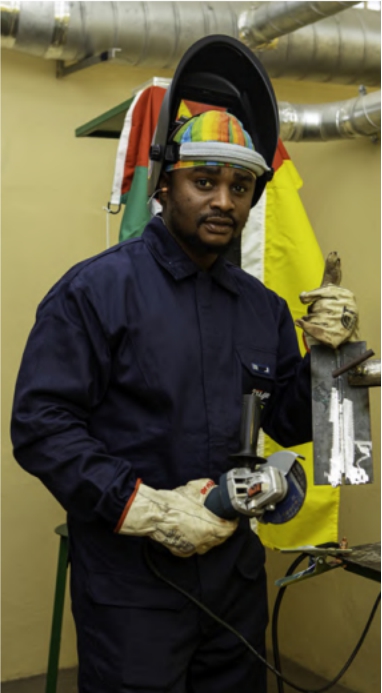
“My participation in the African welding championship opened up an opportunity for me today to work on natural gas projects”–Armando Macuácua
While welding was once viewed as an “arbitrary” field where anyone could practice without specific criteria, the landscape has changed, and standards have risen. Professional quality and certification have become essential.
In line with this shift, the 4th TWF Annual Assembly and Conference took place concurrently with the African Welding Championship at the Metalworking Industry Vocational Training Center (CFPM). Supported by the TWF, the Industrial Association of Mozambique (AIMO), Electro Portugal, and other partners, the event brought together 20 competitors from Mozambique, Angola, South Africa, Cape Verde, Ethiopia, Senegal, and Nigeria.
For Mozambique, the African welding championship was an opportunity to showcase the capabilities developed as part of the ongoing effort to cultivate a skilled workforce.
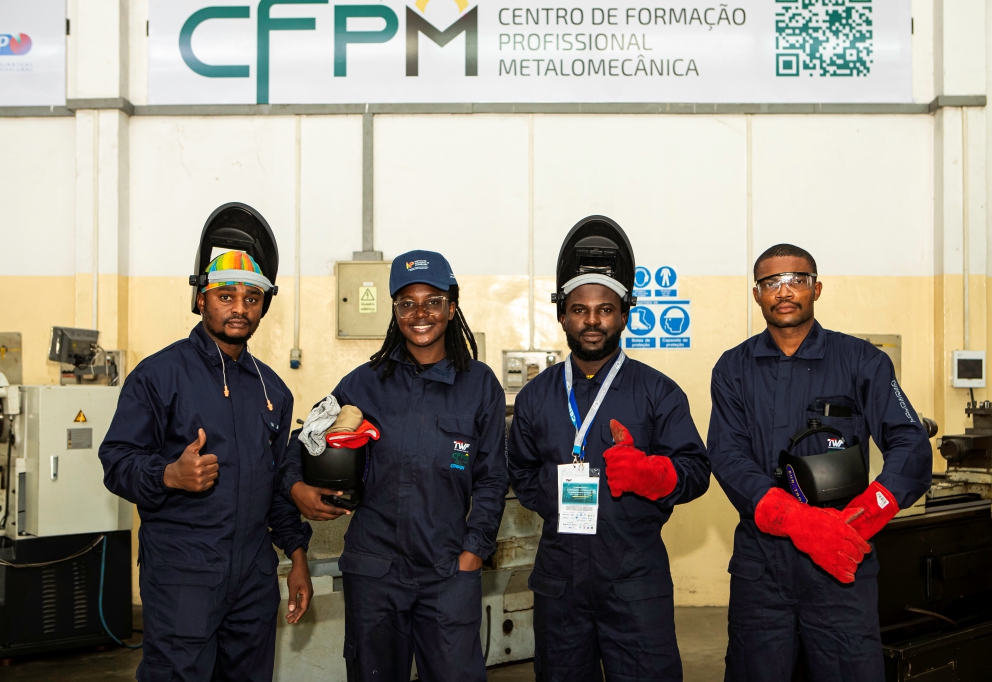
”Competing against experienced professionals challenged me to raise my game and reinforced my determination to keep honing my skills”–Anita Castro
The country was represented by two individuals. Armando Macuácua, from the Mozambique Welders Association (ASM), took third place in the Shielded Metal Arc Welding (SMAW) category.
Macuácua made no secret of his satisfaction at being ranked among the best welders in Africa. “It was a great experience; participating in the competition opened up an opportunity for me to work on natural gas projects. I have been in Cabo Delgado since early July, working for a multinational company,” he said.
Angolan welder Anita Castro, a competitor in the African welding championship, shared this same sense of satisfaction. Although she did not place among the top competitors, the young Angolan praised her participation in the event, explaining that both the TWF conference and the championship were invaluable experiences for her professional development. “I leave this experience more confident and even more aware that quality technical training can place young Africans on an equal footing on major international stages,” Anita Castro stated.
To foster higher quality standards and professional training for welders, a Professional Training and Mobility agreement was signed during the TWF 2026 conference. Developed in partnership with the Portuguese company CS Wind, the agreement aims to establish a more direct link between vocational training and job opportunities within the international industry.
The program will allow Mozambican welders to obtain welding certifications and access job opportunities in Portugal. Thirty participants are already undergoing three-month training in Mozambique, followed by a month of specialized training in Portugal, before entering the job market.
The director of CENFIM – Professional Training Center for the Metallurgical and Metalworking Industry in Portugal, Manuel Grilo, stressed that young Mozambicans will be able to improve their skills in Portuguese lands. “The welding championship highlighted the importance of skills-based learning and warned that there will be a lot to do to create the necessary conditions to carry out professional training that serves the country’s needs”, emphasized Manuel Grilo, remembering that the TWF conference “gave special emphasis to the need for qualification of human resources to guarantee sustainable and competitive development of companies and the country.
Edição 90 JUL/OUT | Download.
">

















0 Comments