

Maria Chalé “There are still many stories to be told”
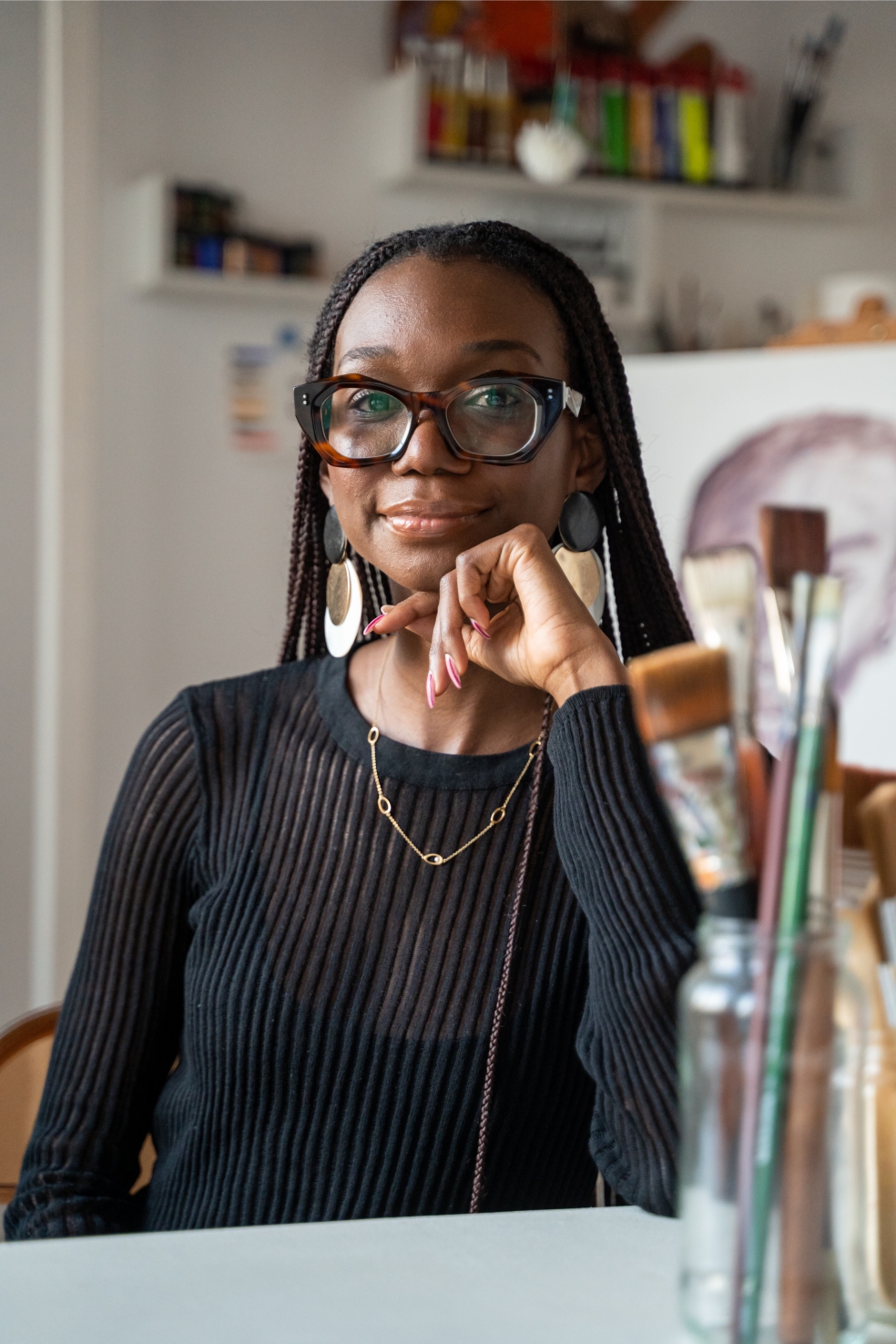
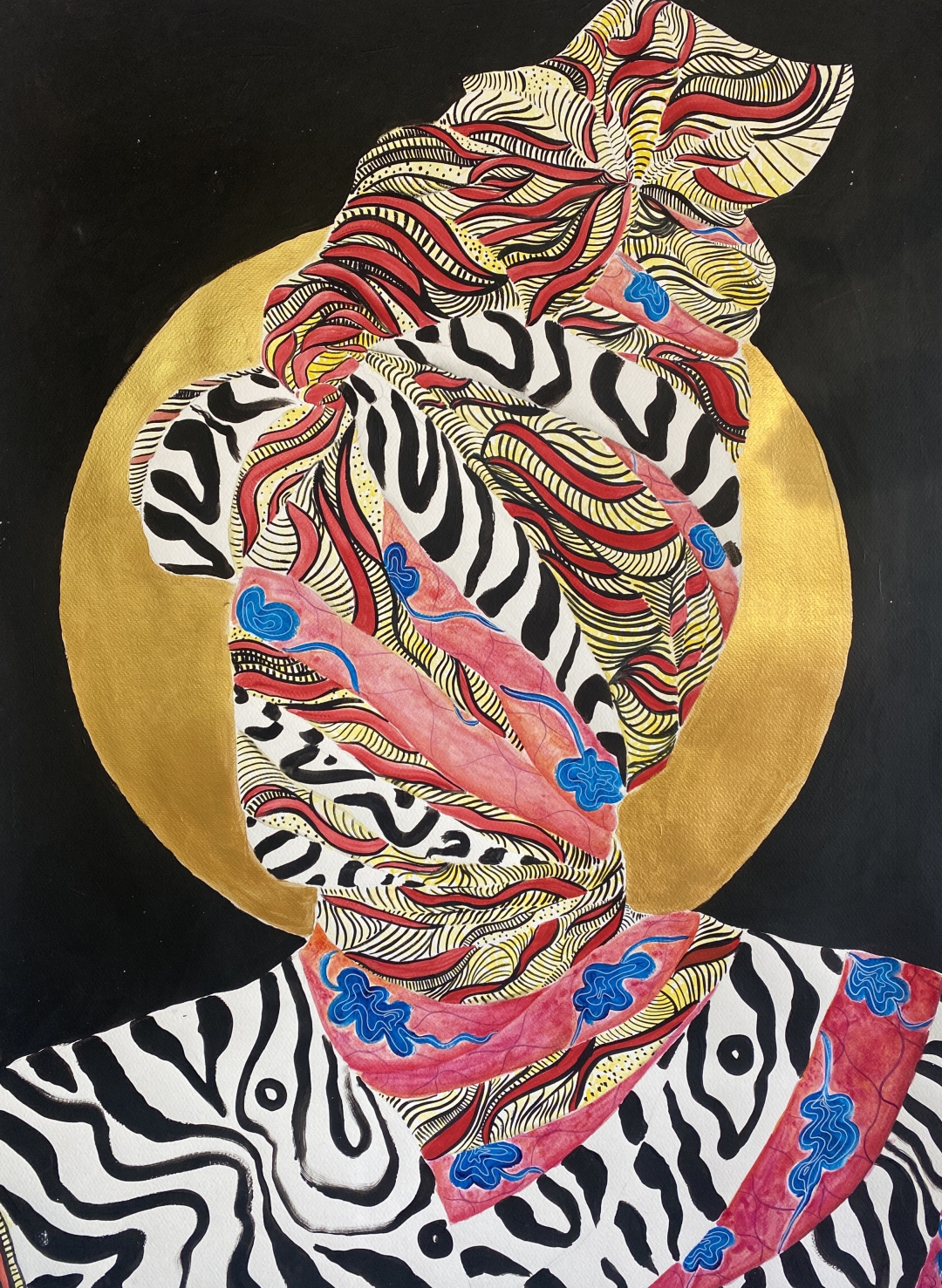
In Maria Chalé’s work, the painting seems to reject stillness; it escapes from the paper or raw canvas, moves, and transforms itself. It is in this transitional space between art and life, between the private and the public, between the graphic and the organic, that the artist constructs her own visual universe.
▶ Your art thrives on a dialogue between graphic patterns and human figures. Is this a conscious decision, or does it arise organically during the creative process?
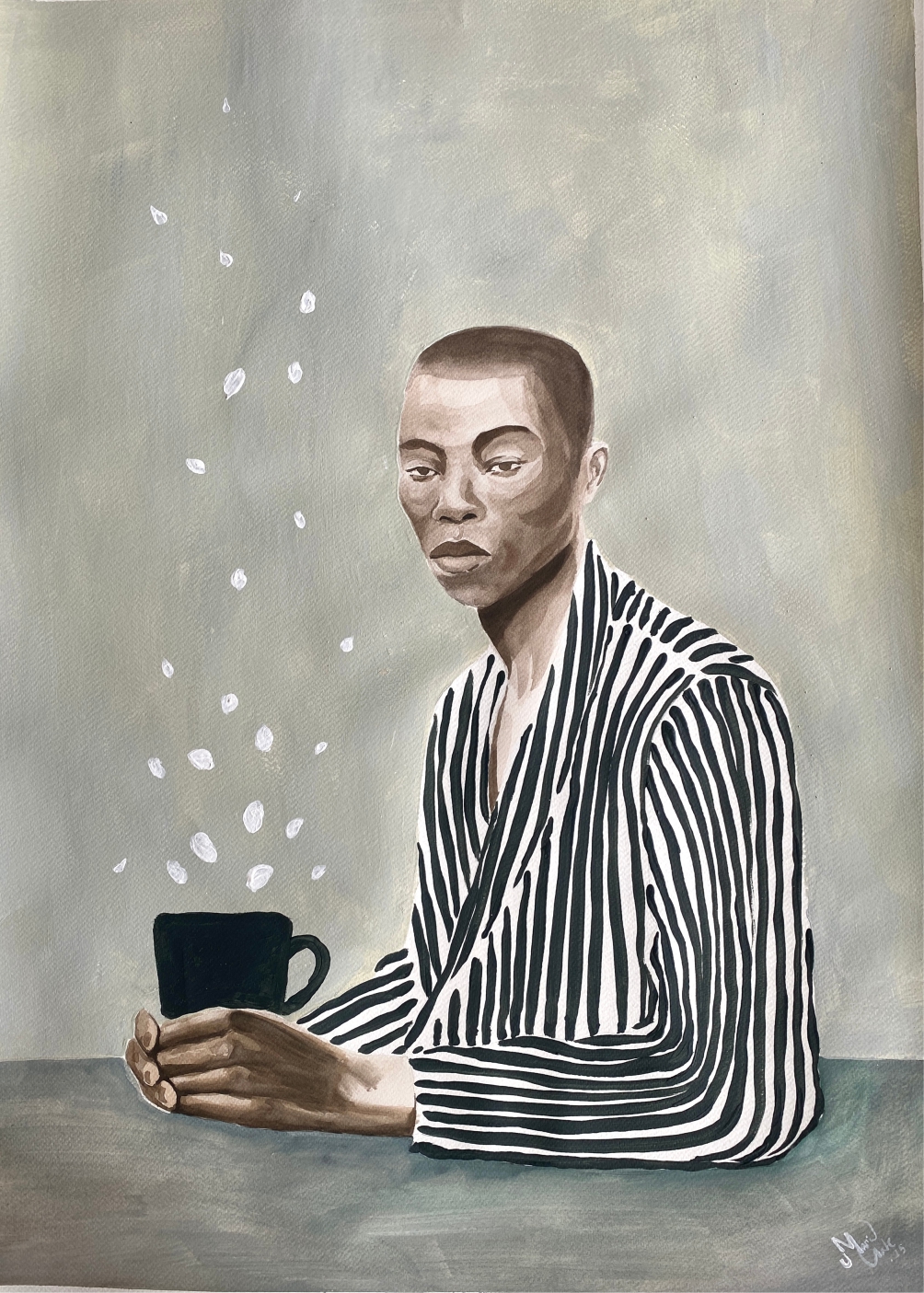
My work stems largely from this connection to portraits. I like faces because I feel they’re never just what we see – they carry experiences, stories, memories, and even representations of a generation or a moment in time.
▶ Patterns… What role do they play in this dialogue?
The patterns come into play almost as an extension of that. They aren’t something separate or conceived in a very rigid way, but rather a way of responding to the face, of accompanying it, or even of intensifying it. Sometimes it’s a color, a line, or a simple motif that helps me say more without having to explain everything. Ultimately, it’s an interplay between what’s already there on the face and what I add to open up other interpretations.
▶ When you start a piece, do you begin with the image or the visual composition?
Normally, I start from the image. In fact, I almost always come with an idea of what I want to convey, an emotion, a state, a purpose for the painting. From there, I start to think about the best way to build this visually.
▶ The use of gold appears as a line, an outline, and a recurring motif. What does this element allow you to express that the other colors do not?
Gold appeared in my first solo exhibition, and from then on, it became almost a sort of hallmark of that moment. I wanted an element that would run through several works, something that would create a connection between them. Today, when I see a piece with gold, I can place it in time, understand at what stage of my journey it was created. Back then, gold had a lot to do with the idea of cultural heritage—things passed down from generation to generation, customs we want to keep alive, and others that, for various reasons, are gradually being lost.
▶ Can the visual silence on the faces in your works be understood as a form of language?
Yes, “silence” is indeed an active part of my work. Not in the sense of absence, but of restraint. That silence ultimately functions as a language; it isn’t saying less—it’s just saying it in a different way.
▶ Your work often avoids narratives centered on pain. What do you seek to place at the center of your portrayal?
The starting point for my work is always my own experiences. So far, I haven’t been interested in portraying pain as the central narrative. What interests me most is exploring other forms of presence.
▶ What narratives are yet to be constructed?
I think there are still many narratives to be constructed, especially when we step outside our own bubbles and stop always looking from the same places. That’s when many other possible interpretations emerge. Often, the same frames are repeated over and over, and that limits what we can see. I’m more interested in the possibility of different presences – more everyday, more open – that aren’t always tied to a single form of interpretation.
▶ Your work exists in a tension between the decorative and the psychological. How do you view that relationship?
I’m a very visual person by nature. I love fashion and design, and I have a degree in architecture. Interestingly, it was architecture that made me start paying closer attention to what people feel. I’ve always believed that the way a space is built or decorated should reflect the lives of those who inhabit it. I bring that perspective to my work. When I do a portrait, the process is similar. I’m interested in what lies behind that face and how I can convey that harmoniously through visual elements.
▶ What are you looking for in abstract studies?
Discovery. More than control or freedom in the absolute sense, what I’m looking for is that feeling of not having the outcome completely determined.
Edição 90 Julho/Outubro Download.
">














0 Comments